

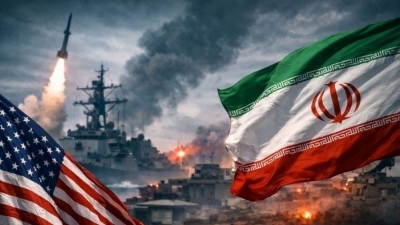
Trump claimed Iran is near defeat but that the war is not over yet – Iran hit Israel’s radars, leaving it unable to "see" Iranian missiles
As the war in the wider Middle East enters its 13th day, the front is now moving to the Persian Gulf as Iran struck a series of oil fields and tankers in the Strait of Hormuz, causing oil prices to skyrocket once again above $100 per barrel.
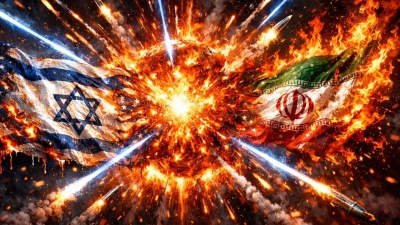
Iran declares it is ready for total war, calling President Trump "Satan" and "stupid," and is proceeding with "strikes" on Israel in coordination with Hezbollah, which for hours bombarded northern Israel with missiles and drones.
From his side, Trump provides a different, albeit contradictory, image. Although he claims Iran is near defeat, that the US has won, and that they have the capability to level the entire country, making any reconstruction "nearly impossible," he says they will not do so. However, he emphasizes that while the US has dismantled Iran, this does not mean "we will end it immediately." During the night, Israel hit dozens of infrastructure sites of the Iranian regime both in Tehran and western Iran, subsequently launching an "extensive wave" of airstrikes against targets in Tehran and Beirut.
War in the Persian Gulf, attack on tankers
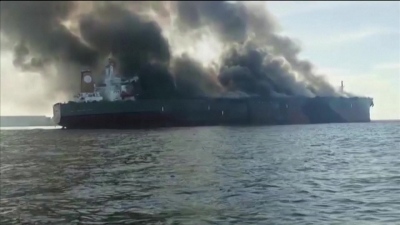
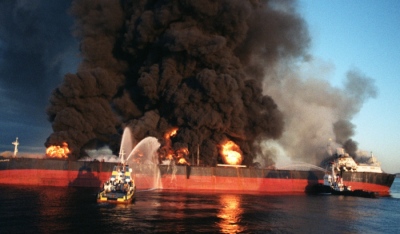
Iran is escalating its attacks against tankers in the Persian Gulf while simultaneously attacking oil fields in the broader Middle East region. So far, the Iranian armed forces have hit six tankers. The latest attack occurred earlier today, Thursday 12/3, in the morning on a container ship off the coast of the United Arab Emirates.
BREAKING: Just hours after Trump told Oil Tankers to enter the Strait of Hormuz, regardless of Iran's threats, an oil tanker is reportedly targeted and decimated by Iran in the Persian Gulf, just past the Strait of Hormuz.
— Ed Krassenstein (@EdKrassen) March 11, 2026
Trump's horrific advice may have just gotten people… pic.twitter.com/sIlztoUWW0
The incident took place 35 nautical miles north of Jebel Ali, a major port city near Dubai, according to the UKMTO, the naval authority responsible for the area. The UKMTO reported that a full assessment of the damage was "hindered by darkness," but that all crew members are safe. During the night, two foreign oil tankers were engulfed in flames in Iraqi waters following an Iranian attack. At least one person was killed, and 38 crew members were rescued from the ships. Notably, Iraqi oil ports have completely ceased operations following the Iranian attacks on the two tankers.
? NEW
— Iran Observer (@IranObserver0) March 11, 2026
US-owned SAFESEA VISHNU oil tanker has been hit near Iraq by an underwater drone
This the first US-owned oil tanker taken out in this war pic.twitter.com/Hzdbs6czk2
Operations at Iraqi oil terminals have been fully suspended, but commercial ports remain functional, Farhan al-Fartousi, director general of the Iraqi Ports Company, told the Iraqi News Agency. Iraq’s oil marketing company, SOMO, stated that the incident "adversely affects Iraq's security and economy." Yesterday, Wednesday 11/3, a Thai bulk carrier was attacked in the Strait of Hormuz and engulfed in flames after its crew was ordered to evacuate, while two more ships reported being hit.
Oil fields also targeted
However, the Iranians also targeted oil fields in various Gulf states. In Oman, rescue teams are working to extinguish a large fire at a fuel storage facility, while Bahrain also announced that Iranian attacks targeted fuel tanks in the northern part of the country. Video from Bahrain shows firefighters battling massive flames at a fuel storage facility in Muharraq. Earlier, Bahrain’s Ministry of Interior stated that the Iranian attacks targeted fuel tanks at the facility in the country's northern province and warned residents in four nearby towns and villages to stay in their homes and close their windows.
? BREAKING: Large oil storage facilities in Muharraq, ?? Bahrain are still burning after being hit by attack drones. pic.twitter.com/66AU7VqZ0G
— Adi Baz (@AdiBazi16) March 12, 2026
At the same time, the Saudi Arabian Ministry of Defense announced the interception of at least 20 drones heading for the Ceiba oil field in the eastern part of the territory. "Drones heading toward the Ceiba oil field were intercepted and destroyed in the desert," the Ministry of Defense reported via X, mentioning the interception of another 18 unmanned aerial vehicles in the eastern part of the kingdom.
Alarm everywhere
Alarm was also raised in Dubai, where Iran hit a property hosting US military personnel. "A fire broke out in a skyscraper in Dubai that served as a hideout for American soldiers who attacked Iran," the Iranian IRIB reported via Telegram, posting a 9-second video showing flames coming from a high-floor window of an unnamed building. Meanwhile, international media report new explosions in central Thailand. The Emirate authorities stated the fire was "completely extinguished" and there were no injuries after a drone crashed into an apartment building near a district in Dubai Creek Harbor. Meanwhile, in Kuwait, an Iranian attack hit a residential building in the southern part of the country, resulting in two injuries.
Israeli air bases hit
The Iranian military announced a drone attack against the Palmachim air base and the Shin Bet headquarters in Israel. "In recent hours, the Iranian military, with offensive drones, attacked the control tower, the runway, and the facilities of the Palmachim and Ovda air bases of the state of Israel, as well as the headquarters of Shin Bet," the Iranian military announced.
The Palmachim air base, near Tel Aviv, serves as Israel’s satellite launch and missile testing center, while hosting anti-aircraft defense systems such as David’s Sling and Hermes 900 drones. The Ovda air base is a strategic facility and training base for the Israeli Air Force, and it hosted US F-22 fighters. Shin Bet serves as the operational heart of Israel’s internal security, undertaking tasks such as security operations command and protection coordination for important figures and critical state facilities.
Israel's radars dismantled
According to the Tasnim agency, the powerful Iranian strikes on Israel's radars have caused a disruption in the ability to detect the launch time of Iranian missiles. As Tasnim reports, following Iran’s recent actions against several more Israeli reconnaissance facilities, their ability to pinpoint the launch time of Iranian missiles and drones has essentially been severely disrupted.
For this reason, sirens are heard intermittently in Israel. It added that as of today, several Iranian launches toward Israel hit their targets without any warning or preparation from the Israeli side and without facing serious anti-aircraft defense. In some cases, even without any launch from Iran, sirens sounded in Israel. Based on this information, Israeli military forces currently cannot be certain that when there is no launch warning, a missile is not headed toward them. And even when a launch warning is issued by Iran, they cannot be sure if a missile has actually been launched or not. This is a significant development that could cause great confusion in the Israeli defense system.
Larry Johnson (former CIA analyst): Israel has just 1 minute before Iranian missile impact
Iranian forces have several objective advantages over the US and Israel and are destroying their military plans, stated former CIA analyst Larry Johnson. "If the goal of US military attacks is to affect as large a part of the population as possible, it is important to consider that 70% to 80% of Iranians are scattered across the country, whereas in Israel, about 80% of the population is concentrated in Tel Aviv and Haifa.
Thus, unlike the West, which must literally attack hundreds of different targets trying to undermine the will of the Iranian people, Iran only needs to hit two. The Israelis are suffering. They are sending signals—they want a truce," Johnson emphasized, highlighting that Iran’s counter-attacks have largely deprived the US and Israel of advantages and ruined their military plans. "No one could have imagined that Iran would knock out five radars. This blinded both the US and Israel. Previously, Israel might have had 30 minutes of warning: missiles are coming. Not now. Now they have perhaps a minute before the attack. The US counted on maintaining a presence in the Persian Gulf—in Saudi Arabia, Kuwait, Bahrain, Qatar, even the United Arab Emirates. Now this becomes impossible," Johnson underlined.
Sweeping strikes
The Revolutionary Guard (IRGC) during their latest attack launched Qadr, Emad, Khyber Shekan, and Fattah missiles against targets in Tel Aviv, Jerusalem, and Haifa, as well as US bases in the region, such as Al-Azraq and Al-Kharj, in cooperation with Islamic Resistance forces. "The joint and comprehensive operation of the IRGC and Hezbollah, with a continuous rate of fire over 5 hours, in the '40th wave' of operation Waadeh Sadeq 4 with the holy code 'Ya Amir al-Mu’minin Alayh al-Salam', combined the launches of Qadr, Emad, Khyber Shekan, and Fattah missiles by the IRGC with the launches of drones and extensive offensive missiles by Hezbollah, against more than 50 targets across the occupied territories, bringing the enemy face to face with a new reality in the field.
This strong and unified front caused serious strikes to the military bases of the Israeli regime from Haifa in the north, Tel Aviv in the center, and Be’er Sheva in the south. In this broad attack, the US bases Al-Azraq and Al-Kharj in the region also received effective hits from IRGC missiles. As the media of the Zionist regime have admitted and confirmed, missile launches from Iran to Israel have increased significantly in the last 24 hours and Israeli losses have multiplied. The deadly strikes continue. The 'life from siren to siren' of Israeli residents and their long stay in shelters are considered the main achievement of 'liar' Donald Trump and 'evil' Benjamin Netanyahu in this war," the Revolutionary Guard state.
We fully control the Strait of Hormuz
The spokesperson for the Khatam al-Anbiya Central Headquarters claimed that the Strait of Hormuz is undoubtedly under Iran’s control. "The false image of the war ending in your favor, by resorting to misleading media that reflect the truth upside down, will yield no benefit. We have no trust or faith in you and will not stop until victory… The defeated enemy does not determine the reality of the field. The state of the evil enemy is summarized in one word: 'Annihilation.'
And the bad news for you is that this situation continues. Why don't senior US political and military officials in Washington, instead of talking too much, travel to the region to see for themselves the real situation on the ground and the terrifying condition of the bases and American soldiers? To the chatterers who talk about minefields, we recommend that before they look at the mines, they pay attention to the time bomb! That is, the 'tick-tock' until the explosion of oil prices..." said the Iranian spokesperson for Khatam al-Anbiya.
Satan and stupid… Trump
A top military advisor to Iran’s new Supreme Leader, Mojtaba Khamenei, called US President Donald Trump "Satan" while promising that Tehran would destroy Israel. "Trump is the most corrupt and most foolish president in US history," Yahya Rahim Safavi told Iranian state television, adding that he is "Satan in person." "In the Middle East, Israel and Iran cannot coexist. Only one of them can remain. The one that will remain is Iran, and what will be destroyed is the Zionist regime," Safavi claimed.
Trump: We won, Iran near defeat
The US President, Donald Trump, claimed that Iran is "near defeat" and declared that the US has the capability to make any reconstruction of Iran "nearly impossible." "We may hit sectors of Tehran and other locations (...) If we do, it will be nearly impossible for them to rebuild their country," Trump said, stating that Iran is "near defeat."
"This doesn't mean we will stop immediately, but they will," the American president underlined, emphasizing that Iran’s navy and air force have been destroyed, that Iran is approaching the moment of missile exhaustion, and that US forces could destroy the power supply "within an hour," leaving the country with reconstruction that could last a generation. However, Trump underlined that he prefers to show restraint rather than take actions that would make "rebuilding their country almost impossible." The president had earlier stated that the US must "finish the job" in Iran, adding that US forces had hit 28 Iranian minelaying ships. He mentioned that Washington will use "a little" of the US strategic reserves to help stabilize markets shaken by the war, and his administration later announced it had authorized the release of 172 million barrels, starting next week.
The first 6 days of the war cost the US 11.3 billion
Officials from the Trump administration estimated during a briefing to Congress this week that the first six days of the war in Iran cost the US at least 11.3 billion dollars, according to a source with knowledge of the matter. This amount, from a closed briefing for senators on Tuesday, did not include the total cost of the war but was given to lawmakers as they requested more information on the conflict. Congressional officials stated they expect the White House to soon submit a request to Congress for additional war funding. Some mentioned the request could reach 50 billion dollars, while others said this estimate seems low.
Americans preparing B-1 bombers
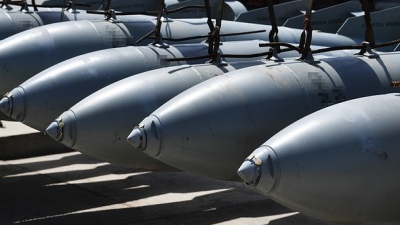
However, videos taken on Wednesday at an air base in the UK show American B-1 bombers being loaded with "bunker buster" bombs, an indication that the Pentagon may be ready to send heavy bombers over Iran to strike deep-seated targets such as missile and drone storage facilities. The videos also show a missile launcher being removed from the weapons bay of at least one B-1 at RAF Fairford.
The B-1 can carry air-launched cruise missiles, which can be fired from hundreds of miles away from their targets, out of range of anti-aircraft missiles. However, cruise missiles are not ideal for hardened underground targets where Iran may be storing ballistic missiles and drones. The Joint Direct Attack Munitions (JDAM) being loaded onto the B-1 bombers in Britain require the bombers to be about 25 miles from their targets. Getting that close, possibly deep into Iranian airspace, is a sign the Pentagon is confident it has largely neutralized Iran’s anti-aircraft capability.
IDF: Hezbollah launched over 200 missiles
According to the Israeli military, Hezbollah launched more than 200 missiles and drones during the night against northern Israel. It was Hezbollah's largest attack since the start of the war in Iran. Sirens sounded in Nahariya, western Galilee, Haifa, as well as Tel Aviv and Jerusalem.
As the IDF claims, some of the projectiles were intercepted, according to initial military assessments, while several long-range missiles launched by Hezbollah also hit open areas. Because the missiles were headed for open areas, military sirens were not activated. The sounds of explosions were reported by residents of central Israel during the attack. Hezbollah stated in a communication that the attack on central Israel "targeted the Glilot base (the headquarters of military intelligence unit 8200)… in the suburbs of Tel Aviv with a burst of advanced missiles."
Israel: Large-scale bombing in Tehran – Death toll rises in Beirut
The Israeli armed forces announced in the early morning hours that they launched a new wave of airstrikes in Tehran. "The Israeli military began a new wave of wide-scale strikes in Tehran," according to an announcement released via Telegram. Specifically, the IDF announced it hit dozens of Iranian regime infrastructure sites in Tehran and western Iran and then launched an "extensive" wave of airstrikes on regime targets in the capital during the night.
"During the first raids in Tehran, fighter jets spotted Iranian soldiers operating at a Revolutionary Guard headquarters in the capital, and a few minutes later struck and killed them," the IDF announced, publishing footage of the strike. According to the IDF, other raids in Tehran targeted headquarters and command centers of the IRGC air force, a facility at Imam Hossein University, the IRGC military academy used as a base by Iranian soldiers, as well as storage and production sites for ballistic missiles and anti-aircraft missiles. In other areas, the IDF hit headquarters and military bases of Iran’s internal security forces, the Basij paramilitary force, and a headquarters of the Iranian Ministry of Intelligence, as stated by the Israeli military.
www.bankingnews.gr






Σχόλια αναγνωστών